01
Appearance and grain
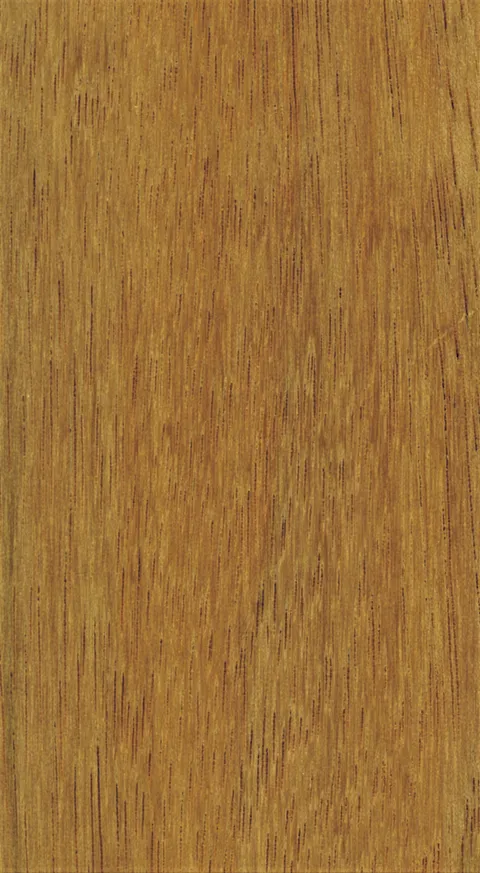
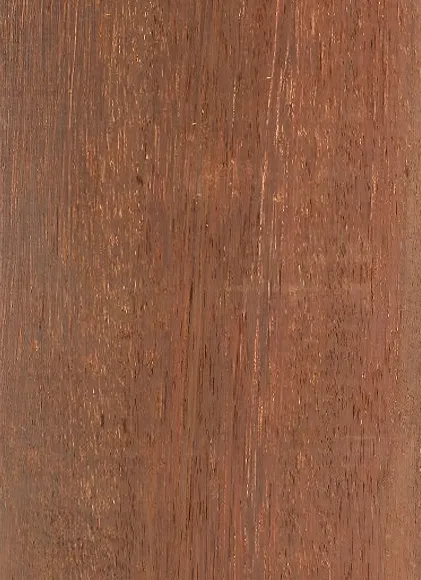
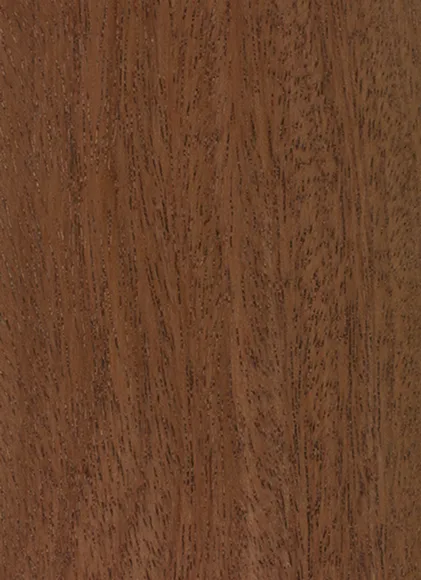
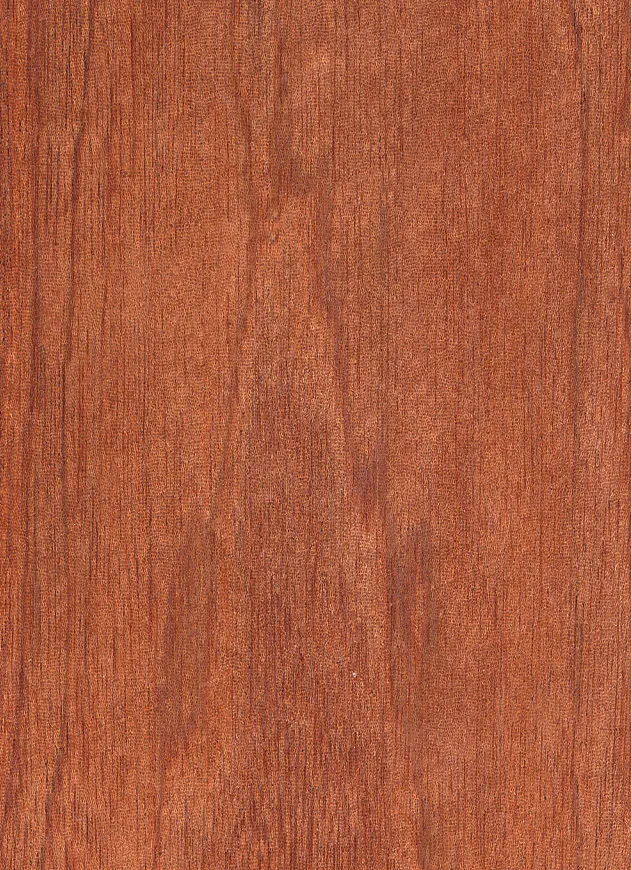
The heartwood is golden to dark reddish brown and darkens with age. Quarter-sawn boards show the ribbon stripe Sapelli is known for, and the species produces an unusual range of other figure: pommele, quilted, mottled, wavy, beeswing and fiddleback. The grain is interlocked and sometimes wavy, and the texture fine and uniform with good luster.
02
Density, hardness and durability
Sapelli weighs about 665 kg/m³ with a Janka hardness of 1,360 lbf, harder and heavier than Acajou. Durability ranges from moderately durable to very durable, with moderate resistance to insects and borers. Interlocked grain causes tear-out when planing and routing, cutters dull slightly, and direct contact with iron stains the wood. It turns, glues and finishes well.
03
Typical applications
Sapelli is used for furniture, cabinetry, flooring, doors, windows and joinery, sliced for veneer, and worked into musical instruments. Figured stock commands a premium and is usually sold separately from plain material.
Specifications
Common name
Sapelli, Sapele
Scientific name
Entandrophragma cylindricum
Distribution
Tropical Africa
Tree size
30–45 m tall, 1.0–1.5 m trunk diameter
Average dry weight
665 kg/m³
Janka hardness
1,360 lbf (6,060 N)
Grain
Interlocked, sometimes wavy
Texture
Fine and uniform, with good natural luster
Colour / appearance
Golden to dark reddish-brown heartwood, darkening with age. Quarter-sawn stock shows a ribbon stripe; pommele, quilted, mottled, wavy, beeswing and fiddleback figure all occur.
Durability
Moderately durable to very durable. Moderate resistance to insects and borers.
Workability
Interlocked grain causes tear-out when planing and routing. Slight blunting of cutters. Stains on contact with iron. Turns, glues and finishes well.
Common uses
Furniture, cabinetry, flooring, doors, windows, joinery, veneer, musical instruments