01
Appearance and grain
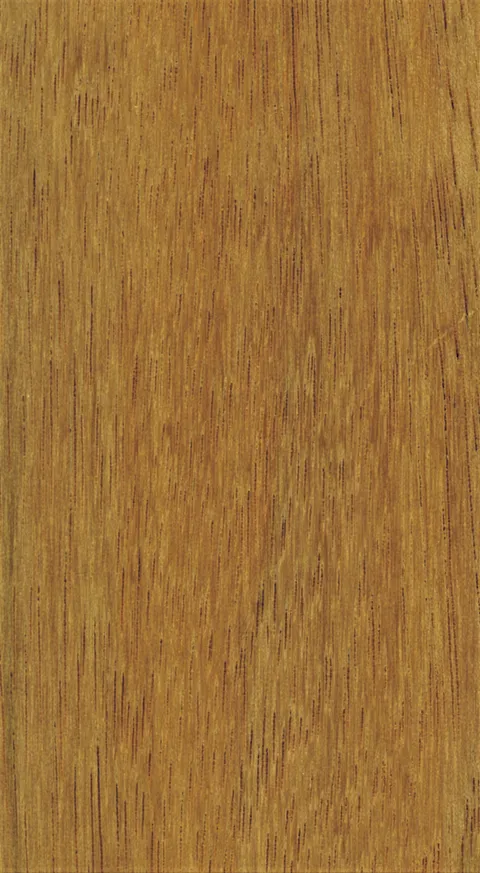
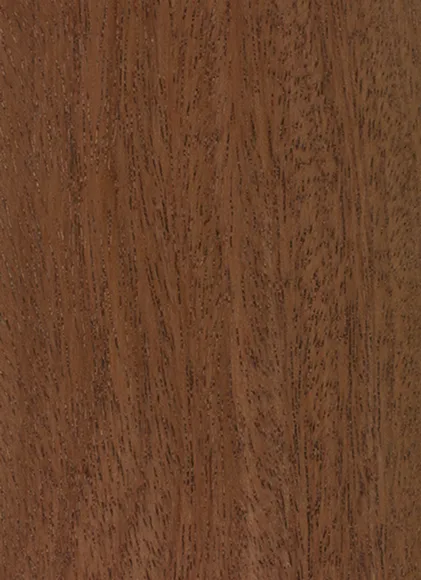
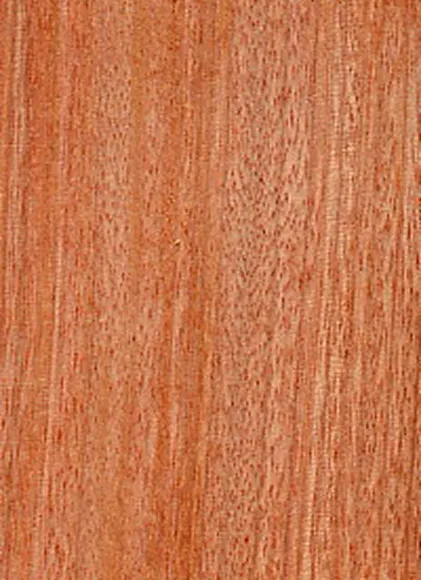
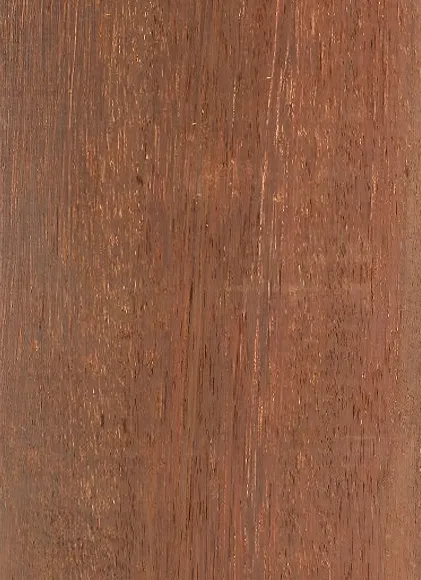
The heartwood is a dark reddish to violet-brown, with small pale streaks of mineral deposit running through the pores. The sapwood is a pale pinkish white and shades gradually into the heartwood rather than stopping at a sharp line. The grain is interlocked and the texture coarse, with little natural shine.
02
Density, hardness and durability
At around 1,065 kg/m³ Azobe is heavier than water. Its Janka hardness of 3,220 lbf puts it among the hardest timbers traded in volume. It is rated very durable, resists insect attack, and weathers well without treatment. Working it is hard on tools: the density and interlocked grain cause tear-out, cutting edges blunt fast, and the natural oil content interferes with gluing. Pre-drill for every fastener.
03
Typical applications
Azobe is a structural timber first. It goes into bridges, jetties, lock gates, harbour works, railway sleepers and heavy decking, and into boatbuilding and industrial flooring where abrasion is constant. Buyers choose it when the alternative is replacing a lighter timber every few years.
Specifications
Common name
Azobe, Ekki
Scientific name
Lophira alata
Distribution
West Africa
Tree size
30–46 m tall, 1.5–1.8 m trunk diameter
Average dry weight
1,065 kg/m³
Janka hardness
3,220 lbf (14,330 N)
Grain
Interlocked
Texture
Coarse, with low natural luster
Colour / appearance
Dark reddish to violet-brown heartwood, with pale mineral streaks in the pores. Pale pinkish-white sapwood that shades gradually into the heartwood.
Durability
Very durable. Strong resistance to insects and good weathering.
Workability
Difficult. The density and interlocked grain cause tear-out and blunt cutters quickly. Oil content makes gluing awkward. Pre-drill before fastening.
Common uses
Bridges, marine construction, harbour works, decking, flooring, boatbuilding