01
Appearance and grain
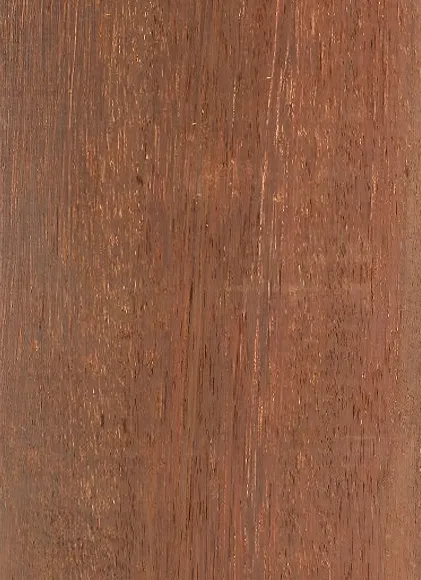
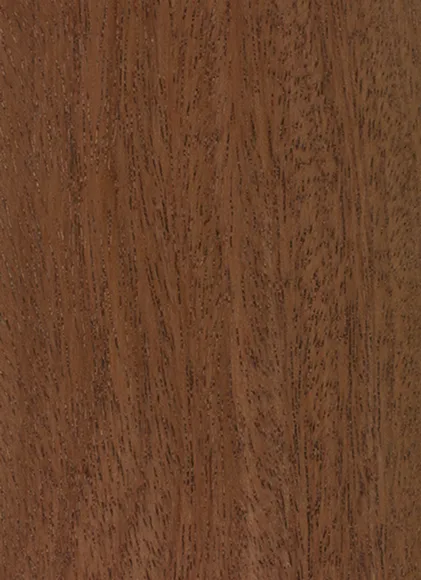
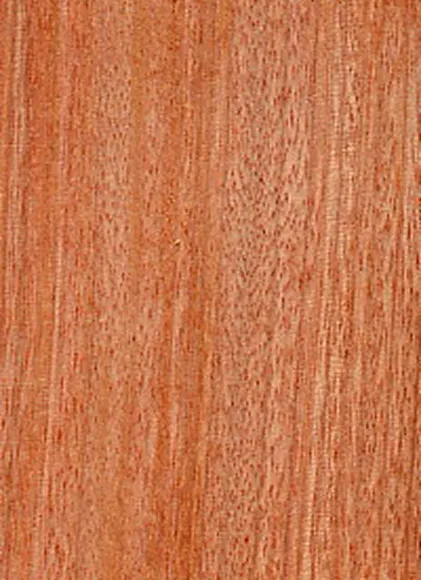
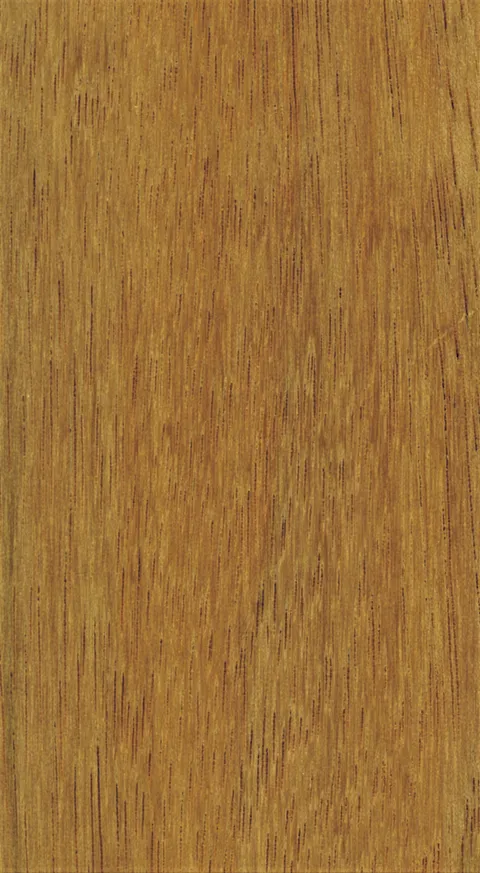
The heartwood is salmon pink, sometimes carrying a few greenish-brown veins. The sapwood is whitish to yellowish and clearly separated from it. The grain is usually straight and only occasionally slightly interlocked, and the texture is medium and even, which is what lets the species peel and slice so cleanly for veneer.
02
Density, hardness and durability
Gombé measures 0.64 at 12% moisture content, about 640 kg/m³, which puts it alongside Iroko and Sapelli rather than among the light plywood species. It bends to 90 MPa, with a modulus of elasticity of 13,940 MPa and a compression strength of 54 MPa, and it stays stable in service with little sensitivity to changes in air humidity. Durability is the limit: resistance to rot fungi and to termites is weak and the wood is difficult to impregnate, though it is immune to Lyctus. Treat it as an interior timber, or as exterior joinery in a temperate climate. No Janka hardness figure has been published for the species.
03
Typical applications
Gombé goes mainly into plywood, as face, back and core, and into peeled and sliced veneer. Beyond that it is used for formwork, boxes and crates, doors and door frames, interior and exterior joinery, panelling, mouldings, staircases, furniture and seats, light carpentry and timber frame housing, vehicle and container flooring, worktops and bar tops. It saws, peels, glues and finishes easily and can be laminated or finger-jointed. Its producer lists it as a direct alternative to Sapelli, African mahogany and Dark Red Meranti.
Specifications
Common name
Gombé, Ekop-Gombé, Angok, Towé, Timba
Scientific name
Didelotia africana, D. idae, D. letouzeyi and D. brevipaniculata
Distribution
West and Central Africa, mainly Gabon and Cameroon
Tree size
Over 50 m tall, 1.0–1.2 m trunk diameter
Average dry weight
640 kg/m³
Janka hardness
No published figure. CBG's datasheet gives no hardness value, and Monnin figures do not convert to Janka — ask us if you need a tested value.
Grain
Straight, occasionally slightly interlocked
Texture
Medium and even
Colour / appearance
Salmon-pink heartwood, sometimes with a few greenish-brown veins. Whitish to yellowish sapwood, clearly separated from the heartwood.
Durability
Weak resistance to rot fungi and to termites; immune to Lyctus. Difficult to impregnate with preservative. Stable in service. Interior work, or exterior joinery in temperate climates.
Workability
Easy to work and finish. Saws easily and peels without difficulty. Nails, screws and staples go in without trouble, and it glues well with all the usual industrial adhesives. Kiln dries without particular problem. Suitable for laminated and finger-jointed stock.
Common uses
Plywood, peeled and sliced veneer, formwork, interior and exterior joinery, doors, mouldings, staircases, furniture, light carpentry, boxes and crates