01
Appearance and grain
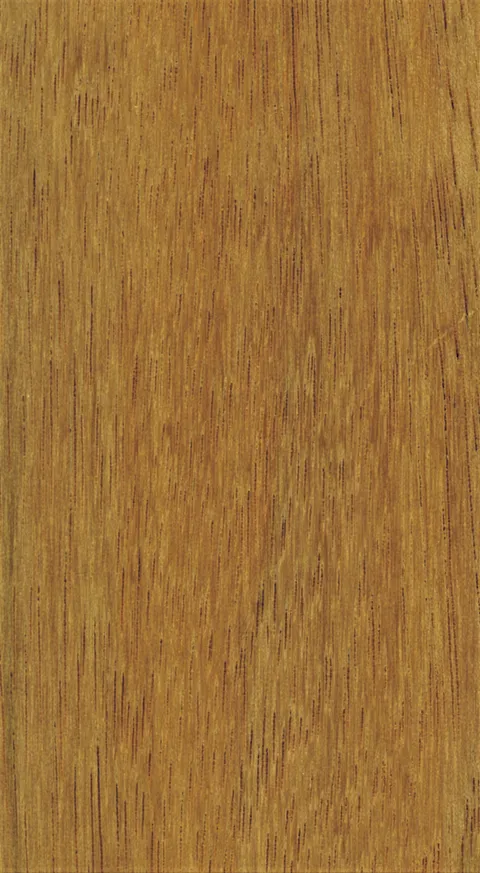
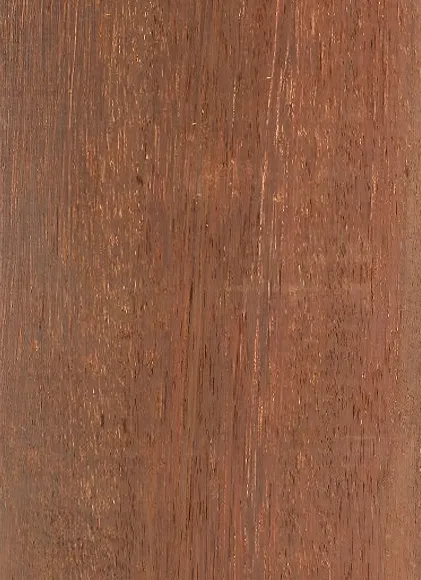
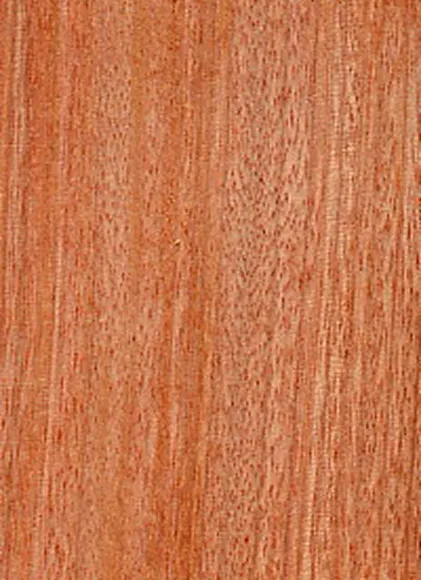
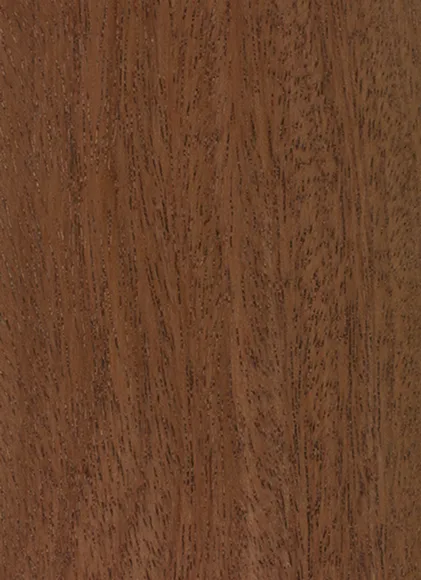
Heartwood ranges from pale pink through to a deep reddish brown, sometimes carrying darker streaks, and it deepens with age. The grain is straight to interlocked, and quarter-sawn boards show a ribbon stripe. The texture is medium to coarse with good luster, and the surface shifts noticeably in the light.
02
Density, hardness and durability
At roughly 545 kg/m³ and a Janka hardness of 850 lbf, Acajou is a medium-weight hardwood: solid enough for furniture and joinery, light enough to handle without machinery. It is moderately durable, and the sapwood in particular is vulnerable to insects. It machines easily apart from tear-out on interlocked grain, and glues, turns and finishes well. Avoid iron fasteners in damp conditions, which stain the wood.
03
Typical applications
Acajou is used for furniture, cabinetry, interior trim, doors and boat interiors, and it is sliced for veneer and plywood. It is not a timber for outdoor structural work without protection.
Specifications
Common name
Acajou, African mahogany, Khaya
Scientific name
Khaya spp. (chiefly K. anthotheca and K. ivorensis)
Distribution
Tropical Africa
Tree size
30–60 m tall, 1.0–1.8 m trunk diameter
Average dry weight
545 kg/m³
Janka hardness
850 lbf (3,800 N)
Grain
Straight to interlocked
Texture
Medium to coarse, with good luster and pronounced chatoyancy
Colour / appearance
Heartwood runs from pale pink to deep reddish brown, sometimes streaked, and darkens with age. Quarter-sawn faces show a ribbon stripe.
Durability
Moderately durable. Moderate to poor resistance to insects and borers.
Workability
Generally easy to work. Interlocked grain can tear out. Reacts with iron fasteners in damp conditions and may stain. Glues, turns and finishes well.
Common uses
Furniture, veneer, plywood, interior trim, boatbuilding, turned items