
01
Appearance and grain
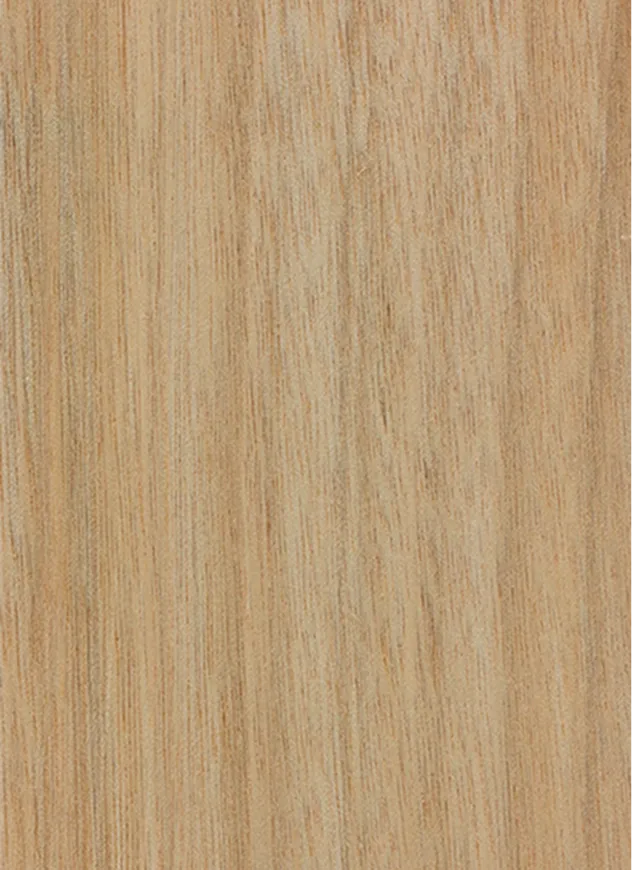
The heartwood runs pale pink to light brown and darkens with age. The sapwood is a narrow greyish white and does not separate cleanly from the heartwood. The grain is straight to wavy or slightly interlocked, and the texture medium with good luster. It is sold as Gaboon mahogany, though it is no relation to African or genuine mahogany.
02
Density, hardness and durability
At around 430 kg/m³ and a Janka hardness of 400 lbf, Okoumé is the lightest and softest hardwood in our range. It is rated non-durable with poor insect resistance, so untreated exterior use is out. Its silica content blunts cutters noticeably, and planing can leave tear-out or a fuzzy surface. It peels cleanly for veneer, and glues and finishes well.
03
Typical applications
Okoumé is overwhelmingly a plywood and veneer species, including marine plywood once treated. Beyond that it is used for boatbuilding, light interior joinery, millwork and musical instruments. Buy it for strength-to-weight, not for durability.
Specifications
Common name
Okoumé, Gaboon
Scientific name
Aucoumea klaineana
Distribution
Equatorial West Africa, chiefly Gabon
Tree size
30–40 m tall
Average dry weight
430 kg/m³
Janka hardness
400 lbf (1,790 N)
Grain
Straight to wavy or slightly interlocked
Texture
Medium, with good natural luster
Colour / appearance
Pale pink to light brown heartwood, darkening with age. Narrow greyish-white sapwood, not clearly demarcated.
Durability
Non-durable, with poor insect resistance. Requires treatment for exterior use.
Workability
High silica content blunts cutters noticeably. Planing and shaping can leave tear-out or fuzzy surfaces. Glues and finishes well.
Common uses
Plywood, marine plywood, veneer, boatbuilding, light joinery, interior millwork