01
Appearance and grain
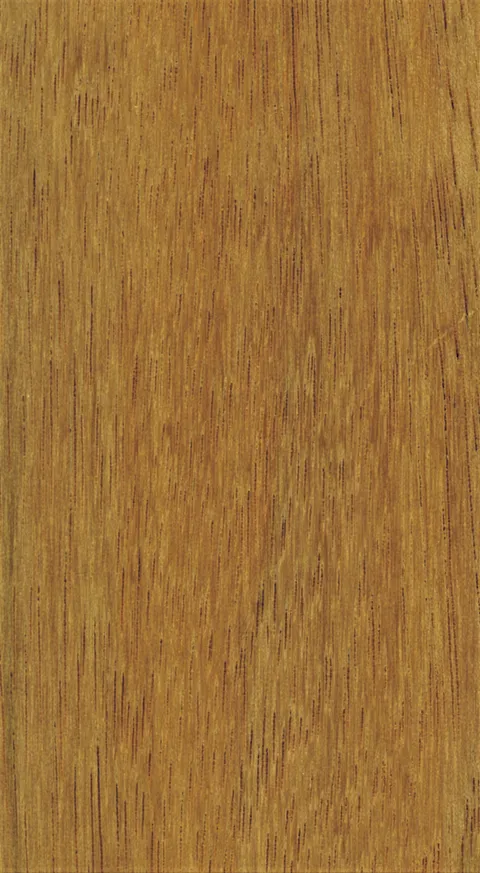
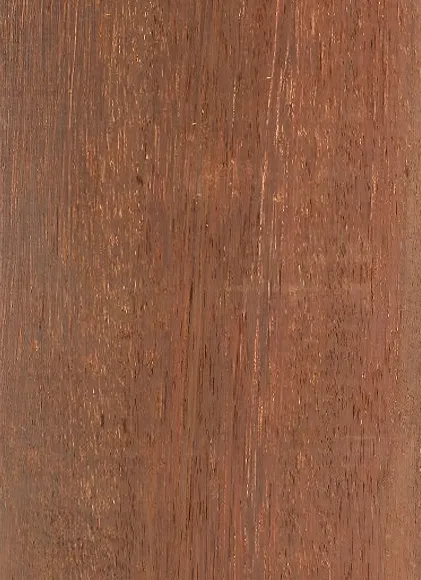
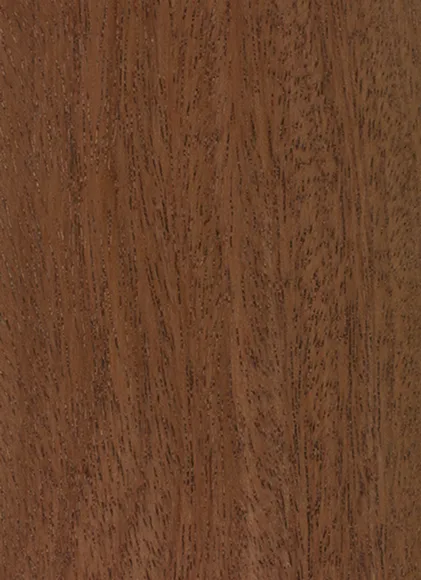
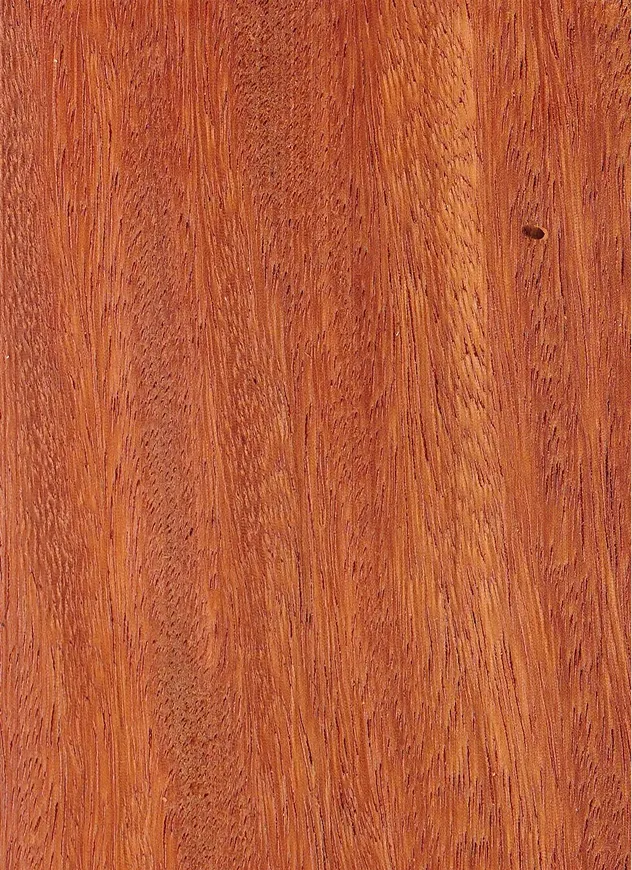
The heartwood is yellow-brown to olive-brown and darkens with age. The grain is interlocked and can run irregular, with a coarse texture throughout.
02
Density, hardness and durability
Okan runs around 900–1,000 kg/m³, and its Janka hardness commonly exceeds 2,000 lbf. It is very durable, with good resistance to decay and insects. That density makes it hard to machine and hard to nail: use strong tooling and pre-drill for every fastener. These figures are drawn from our own trade data rather than a published reference, so treat them as indicative and ask us for the specification of the parcel you are buying.
03
Typical applications
Okan is used for heavy structural work, bridges, marine structures, harbour works, exterior decking and railway sleepers. Where Azobe is unavailable or over budget, Okan is the usual substitute.
Specifications
Common name
Okan, Denya, Adoum
Scientific name
Cylicodiscus gabunensis
Distribution
West and Central Africa
Tree size
Large tree, up to 40–45 m
Average dry weight
900–1,000 kg/m³
Janka hardness
Commonly over 2,000 lbf
Grain
Interlocked, sometimes irregular
Texture
Coarse
Colour / appearance
Yellow-brown to olive-brown heartwood, darkening with age.
Durability
Very durable. Good resistance to decay and insects.
Workability
Difficult to machine and nail. Requires strong tooling and pre-drilling.
Common uses
Heavy structural work, bridges, marine structures, decking, sleepers