
01
Appearance and grain
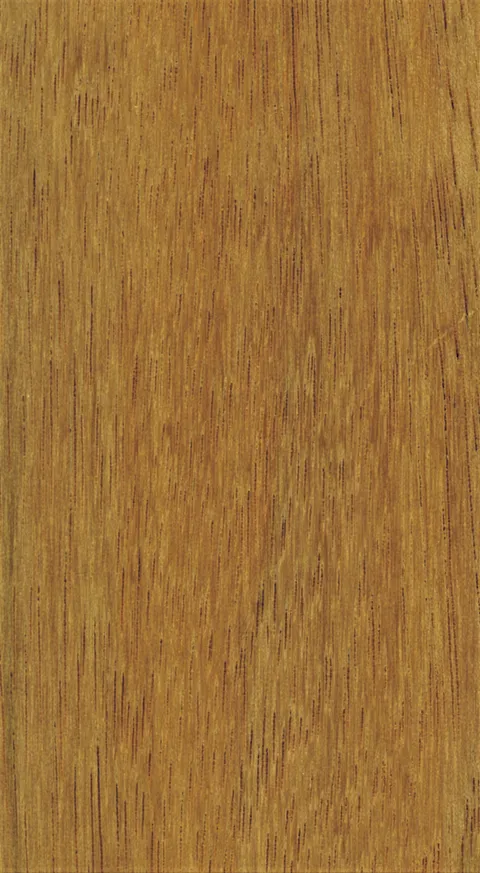
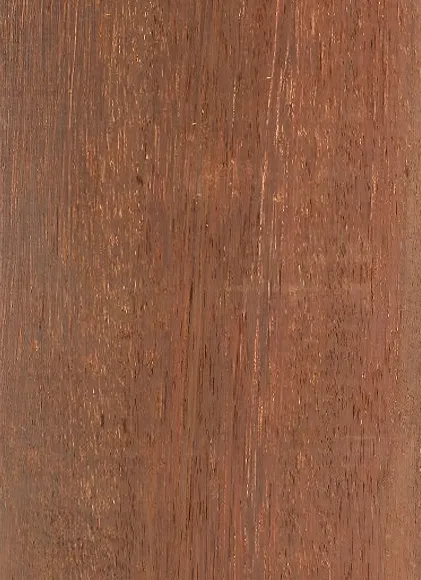
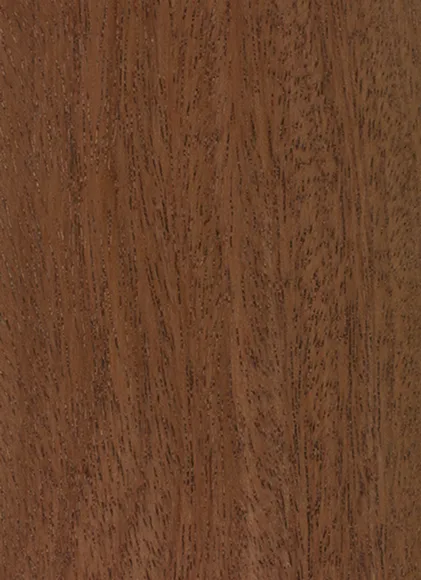
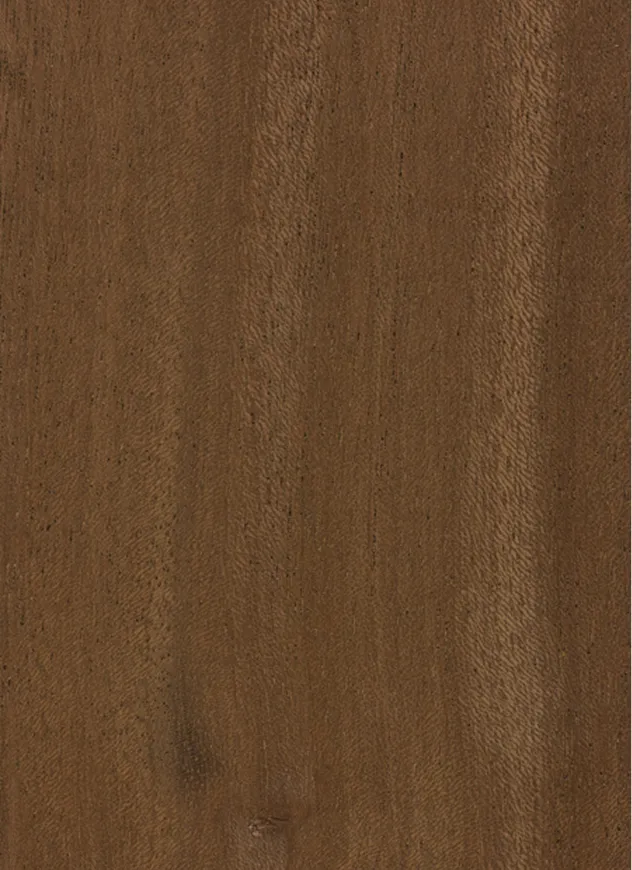
The heartwood is golden to dark reddish brown and darkens with age. Unlike Sapelli, Kosipo rarely shows quilted, wavy or mottled figure, though the grain can produce a moderate stripe. The texture is uniform, medium to coarse, with good luster.
02
Density, hardness and durability
Kosipo weighs about 680 kg/m³, with a Janka hardness of 1,130 lbf. It is moderately durable, holds up moderately against termites, and is open to dry-wood and marine borers. It is easy to work overall, with one caveat: it can carry up to 0.5% silica, considerably more than its Entandrophragma relatives, and that blunts cutting edges. Interlocked pieces tear out when surfaced.
03
Typical applications
Kosipo is used for interior and exterior joinery, doors, windows, stairs, flooring, furniture and cabinetry, and it is sliced for veneer and plywood. Detail exterior work properly; it is not as durable as Iroko.
Specifications
Common name
Kosipo, Omu
Scientific name
Entandrophragma candollei
Distribution
West Africa, south to Angola
Tree size
30–50 m tall, 1.0–1.5 m trunk diameter
Average dry weight
680 kg/m³
Janka hardness
1,130 lbf (5,010 N)
Grain
Straight to slightly interlocked, sometimes moderately striped
Texture
Uniform, medium to coarse, with good luster
Colour / appearance
Golden to dark reddish-brown heartwood that darkens with age. Lacks the quilted and wavy figuring common in Sapelli.
Durability
Moderately durable. Susceptible to dry-wood and marine borers, with moderate termite resistance.
Workability
Overall easy to work, but can carry up to 0.5% silica, which blunts cutters more than other Entandrophragma species. Interlocked pieces tear out.
Common uses
Exterior and interior joinery, furniture, cabinetry, veneer, plywood, boatbuilding