01
Appearance and grain
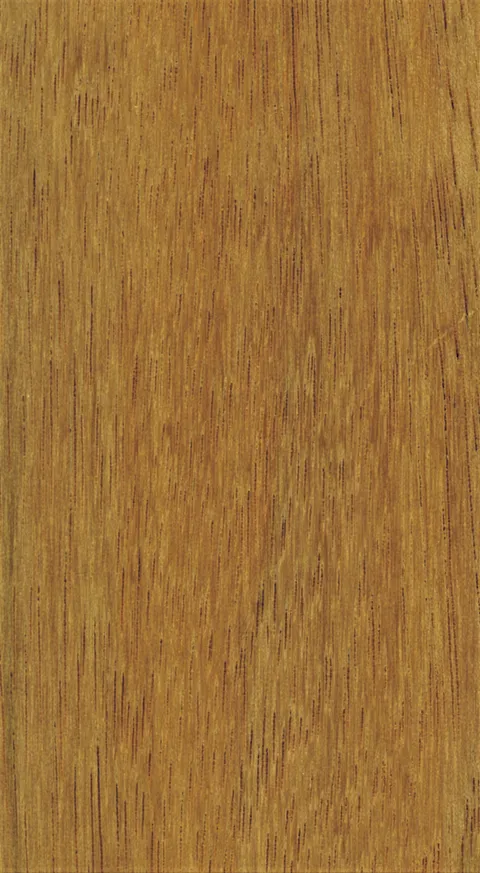
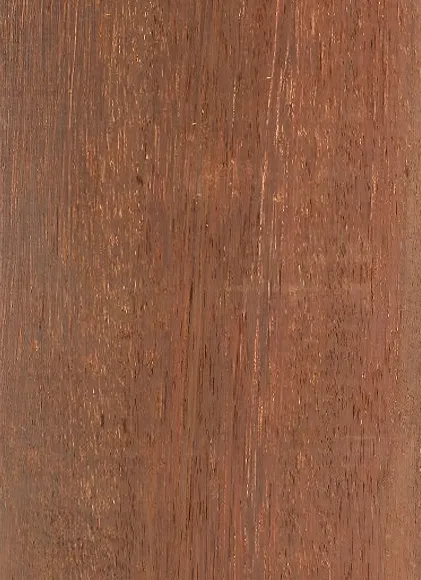
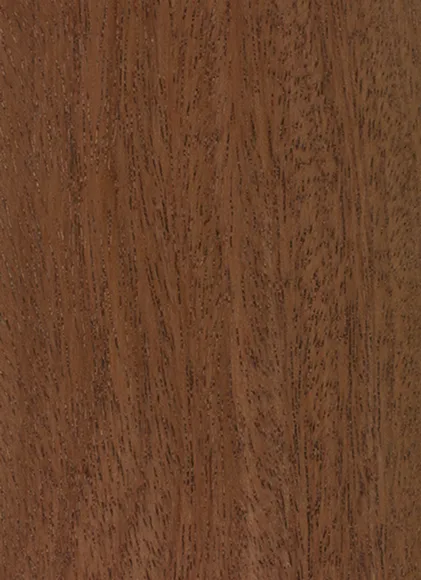
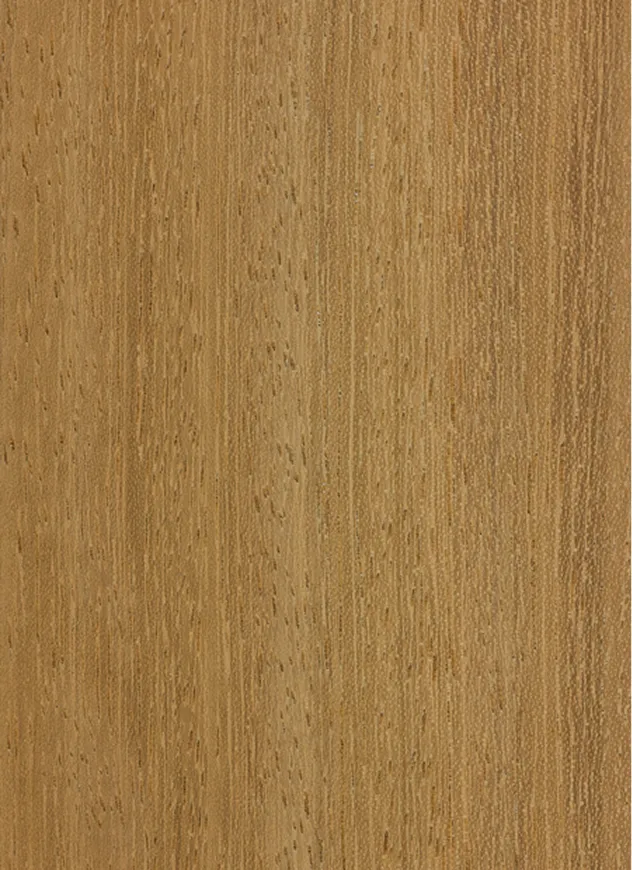
The heartwood starts yellow to golden brown and deepens to a medium brown with exposure. Pale yellow sapwood is clearly separated from it. The grain is interlocked and sometimes irregular, and the texture medium to coarse with good luster. Unfinished surfaces feel slightly oily to the touch.
02
Density, hardness and durability
Iroko weighs about 660 kg/m³ with a Janka hardness of 1,190 lbf, so it is moderately heavy rather than extreme. Its value is durability: it is rated very durable and resists both rot and insect attack, which is why it is used as a teak substitute. It machines well apart from tear-out on interlocked grain. Deposits of calcium carbonate sometimes sit in the wood and will dull cutters severely. It glues and finishes well.
03
Typical applications
Iroko goes into exterior joinery, doors, windows, decking, kitchen worktops, flooring, furniture and boatbuilding, and it is sliced for veneer. It is the default choice where a project needs teak performance at a workable price.
Specifications
Common name
Iroko, African teak
Scientific name
Milicia excelsa and Milicia regia
Distribution
Tropical Africa
Tree size
30–40 m tall, 1.0–1.5 m trunk diameter
Average dry weight
660 kg/m³
Janka hardness
1,190 lbf (5,310 N)
Grain
Interlocked, sometimes irregular
Texture
Medium to coarse, with good luster. Unfinished surfaces feel oily.
Colour / appearance
Yellow to golden or medium-brown heartwood that darkens over time. Pale yellow sapwood, clearly demarcated.
Durability
Very durable. Resistant to both rot and insect attack.
Workability
Generally easy to work. Interlocked grain causes tear-out, and calcium carbonate deposits can dull cutters badly. Glues and finishes well.
Common uses
Exterior joinery, decking, worktops, flooring, furniture, boatbuilding, veneer