01
Appearance and grain
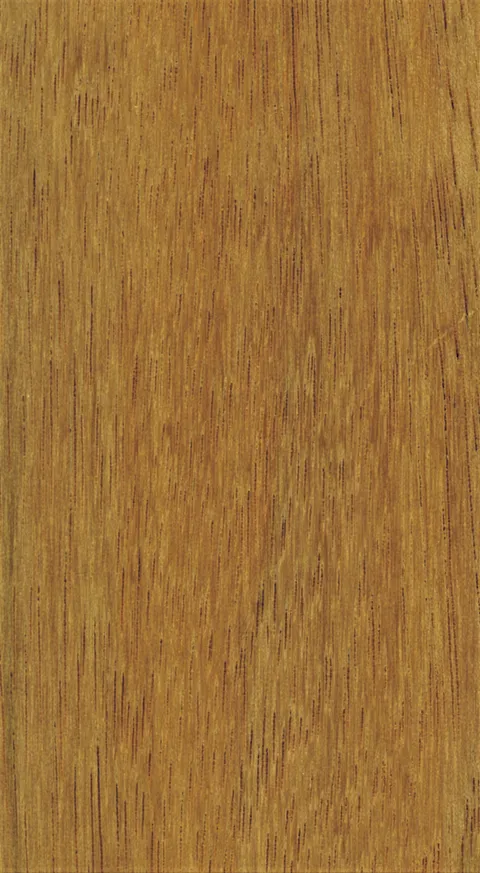
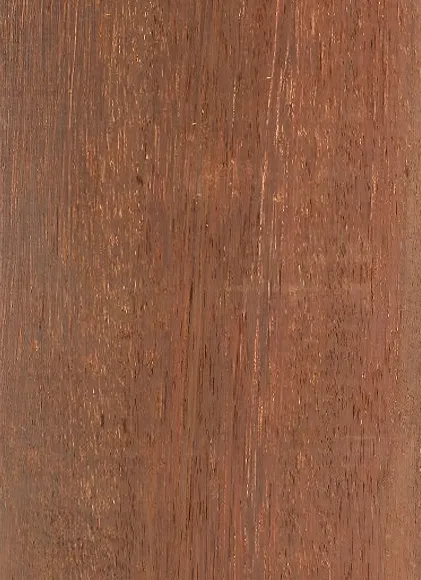
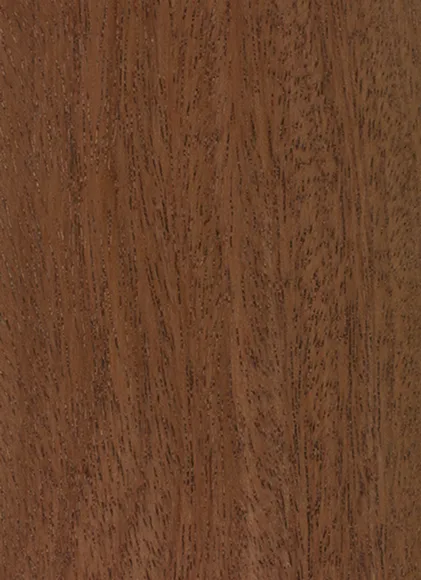
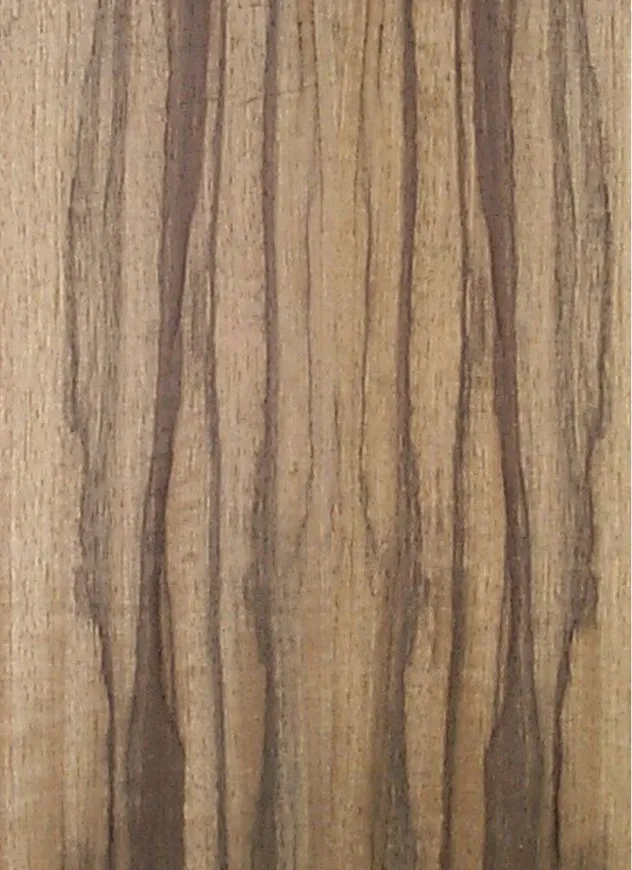
The heartwood is light yellowish to golden brown. Where grey to near-black streaks run through it, the trade calls it black limba; plain unfigured stock is white limba. The sapwood is a pale greyish brown and blends into the heartwood without a clear line. The grain is straight to slightly interlocked, with a uniformly coarse texture and moderate luster.
02
Density, hardness and durability
At roughly 555 kg/m³ and 670 lbf Janka, Fraké is the lightest and softest of our hardwoods. It is rated non-durable and is open to insect attack, so it belongs indoors or under a protective coating. In exchange it is easy to work with hand and machine tools, holds a small amount of silica but barely dulls cutters, and glues and finishes well.
03
Typical applications
Fraké is used for furniture, interior joinery, panelling and turned objects, and it is sliced for veneer and plywood. Electric guitar bodies are a steady niche market, where black limba figure carries the value.
Specifications
Common name
Fraké, Limba, Korina, Afara
Scientific name
Terminalia superba
Distribution
Tropical West Africa
Tree size
20–30 m tall, 1.5–2.2 m trunk diameter
Average dry weight
555 kg/m³
Janka hardness
670 lbf (2,990 N)
Grain
Straight to slightly interlocked
Texture
Uniformly coarse, with moderate luster
Colour / appearance
Light yellowish to golden-brown heartwood. Grey to near-black streaks give 'black limba'; plain stock is sold as 'white limba'. Sapwood is not clearly demarcated.
Durability
Non-durable, and susceptible to insect attack. Not for exterior use untreated.
Workability
Easy to work by hand and machine. Small silica content, but little blunting. Glues and finishes well.
Common uses
Furniture, veneer, plywood, musical instruments, interior joinery, turned objects