01
Appearance and grain
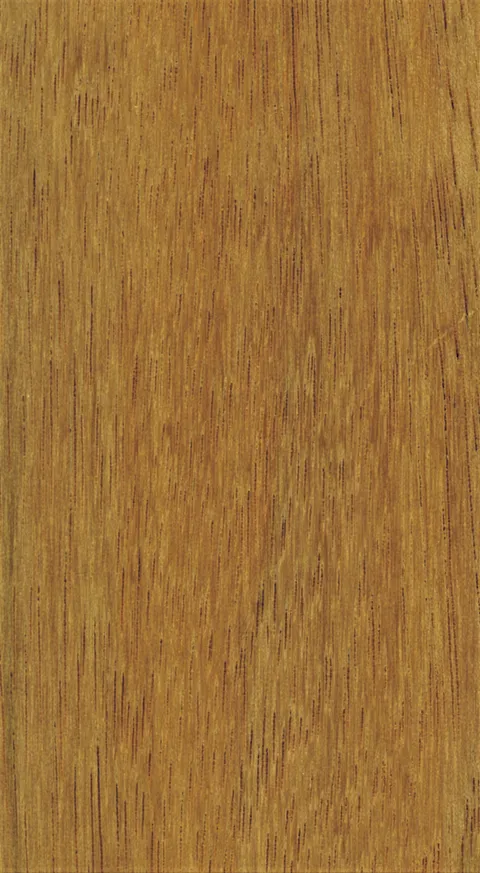
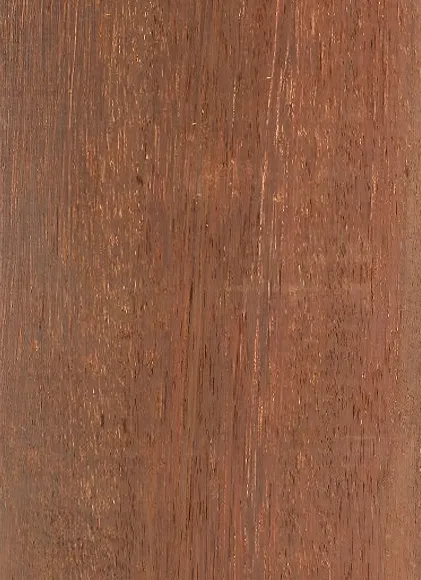
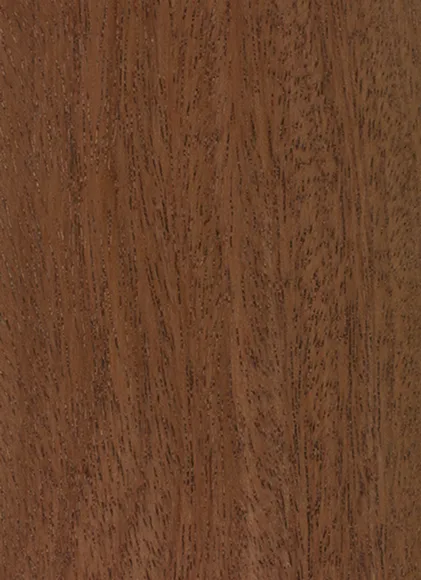
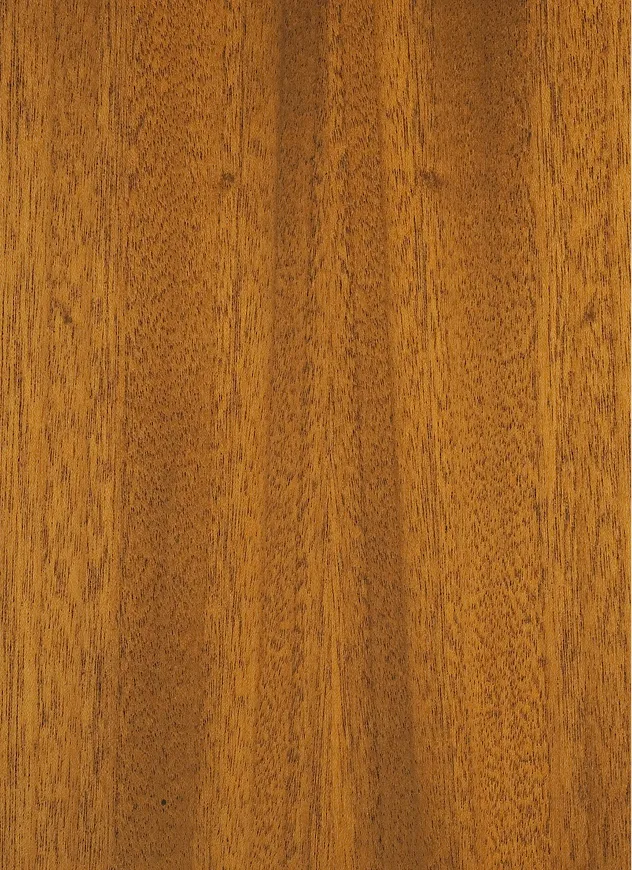
The heartwood is golden yellow to reddish brown, usually carrying darker streaks and veins, and it darkens on exposure. Sapwood is narrow, yellow to light grey, and clearly separated from the heartwood. The grain is slightly interlocked and sometimes straight, and the texture is medium and even with a high natural luster.
02
Density, hardness and durability
Dibetou is a lighter hardwood at around 540 kg/m³, with a Janka hardness of 940 lbf. It is moderately durable: the heartwood resists powder post beetles but is vulnerable to termites, and it is not a timber for ground contact. It works easily with hand and machine tools, needing care only where interlocked grain wants to tear out, and it turns, glues and finishes well.
03
Typical applications
Dibetou goes into furniture, cabinetry, interior joinery, panelling and turned objects, and it is sliced for decorative veneer and plywood. It is chosen for how it looks rather than what it can carry.
Specifications
Common name
Dibetou, African walnut
Scientific name
Lovoa trichilioides
Distribution
West tropical Africa
Tree size
30–46 m tall, 0.6–1.2 m trunk diameter
Average dry weight
540 kg/m³
Janka hardness
940 lbf (4,180 N)
Grain
Slightly interlocked, sometimes straight
Texture
Medium and uniform, with high natural luster
Colour / appearance
Golden yellow to reddish-brown heartwood, often with darker streaks and veins, darkening with age. Narrow yellow to light grey sapwood, clearly demarcated.
Durability
Moderately durable. Resistant to powder post beetles but susceptible to termites.
Workability
Easy to work by hand or machine. Avoid tear-out when surfacing interlocked grain. Turns, glues and finishes well.
Common uses
Furniture, cabinetry, veneer, plywood, flooring, turned objects