01
Appearance and grain
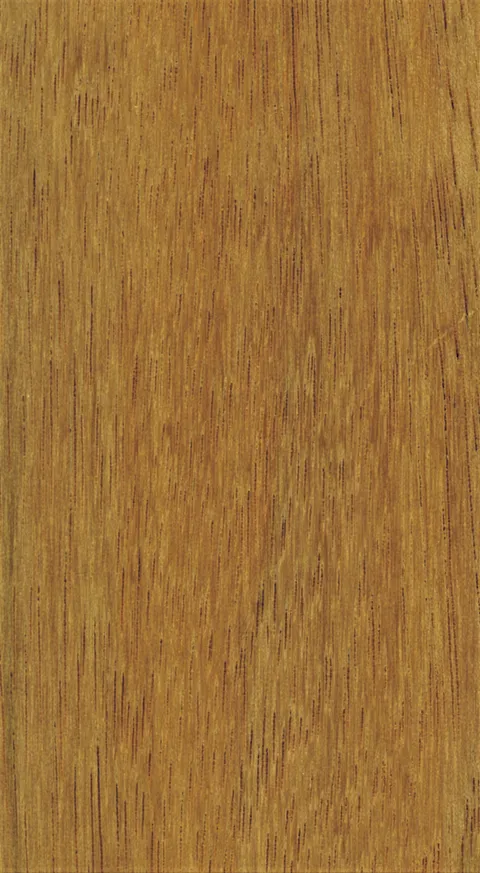
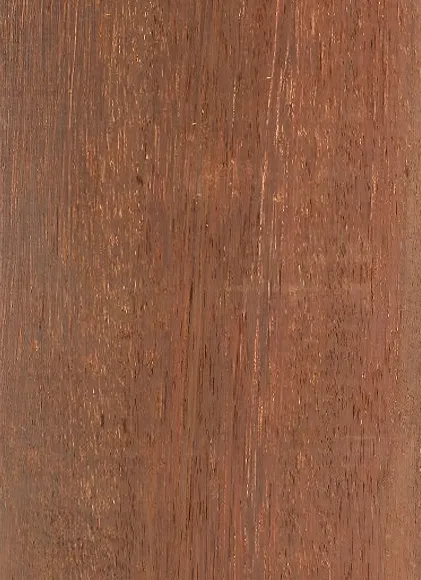
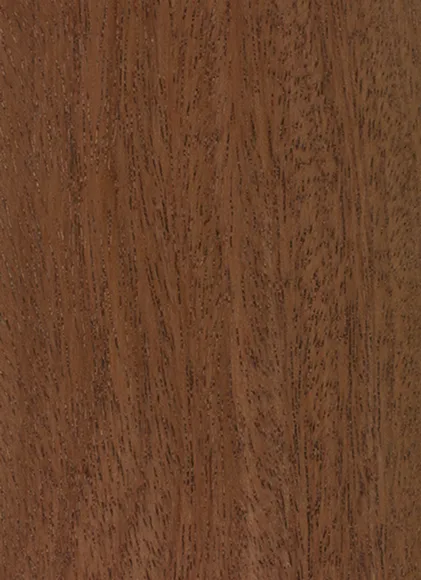
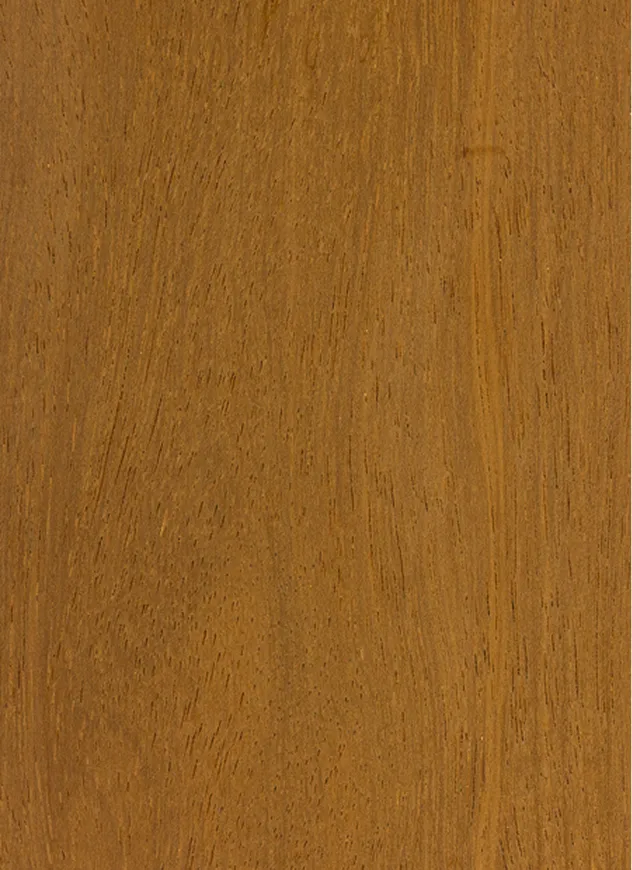
The heartwood is golden brown to orange and darkens as it ages. Light yellow sapwood sits against it in a clear line. The grain is interlocked and often irregular, the texture uniform and coarse, and the surface carries a good natural shine.
02
Density, hardness and durability
At about 770 kg/m³ and 1,550 lbf on the Janka scale, Bilinga is a genuinely heavy hardwood. Durability is rated moderately durable to very durable, and the heartwood holds up against insects and marine borers. It works more easily than its weight suggests, though irregular grain tears out on quarter-sawn faces. It bends poorly. It turns, glues and finishes well.
03
Typical applications
Bilinga is used for docks, bridges, exterior decking, heavy construction and industrial flooring, and it is worked into furniture, cabinetry and turned objects where its colour is wanted. It is a practical alternative to Azobe when the job needs durability but not extreme density.
Specifications
Common name
Bilinga, Opepe
Scientific name
Nauclea diderrichii
Distribution
West and Central Africa
Tree size
30–50 m tall, 1.0–2.0 m trunk diameter
Average dry weight
770 kg/m³
Janka hardness
1,550 lbf (6,890 N)
Grain
Interlocked, often irregular
Texture
Uniform and coarse, with good natural luster
Colour / appearance
Golden brown to orange heartwood that darkens over time. Light yellow sapwood, sharply demarcated.
Durability
Moderately durable to very durable. Moderate to good resistance to insects and marine borers.
Workability
Moderately easy to work. Watch for tear-out on quarter-sawn or irregular grain. Poor bending. Turns, glues and finishes well.
Common uses
General construction, decking, docks, flooring, furniture, boatbuilding, turned objects